Showing posts with label discover tokyo. Show all posts

5/20/19

Tokyo Wards Guide

Tokyo Wards Guide


The special Tokyo Wards comprise the area formerly incorporated as Tokyo City. On July 1, 1943, Tokyo City was merged with Tokyo Prefecture forming the current "metropolitan prefecture". As a result, unlike other city wards in Japan, these wards are not conterminous with a larger incorporated city. While falling under the locale of Tokyo Metropolitan Government, each ward is likewise a precinct with its own elected leader and council, as different urban communities of Japan. The every one of the 23 unique wards is regularly portrayed as City since they are as huge as local urban areas of Japan. For instance, the biggest ward of Tokyo 23 Wards Setagaya-ku or Setagaya City, has a populace of more than 880 thousand individuals. The special wards of Tokyo are: Adachi, Arakawa, Bunkyo, Chiyoda, Chūō, Edogawa, Itabashi, Katsushika, Kita, Kōtō, Meguro, Minato, Nakano, Nerima, Ōta, Setagaya, Shibuya, Shinagawa, Shinjuku, Suginami, Sumida, Taitō and Toshima. This Tokyo Wards Guide will help you learn about them and understand them.
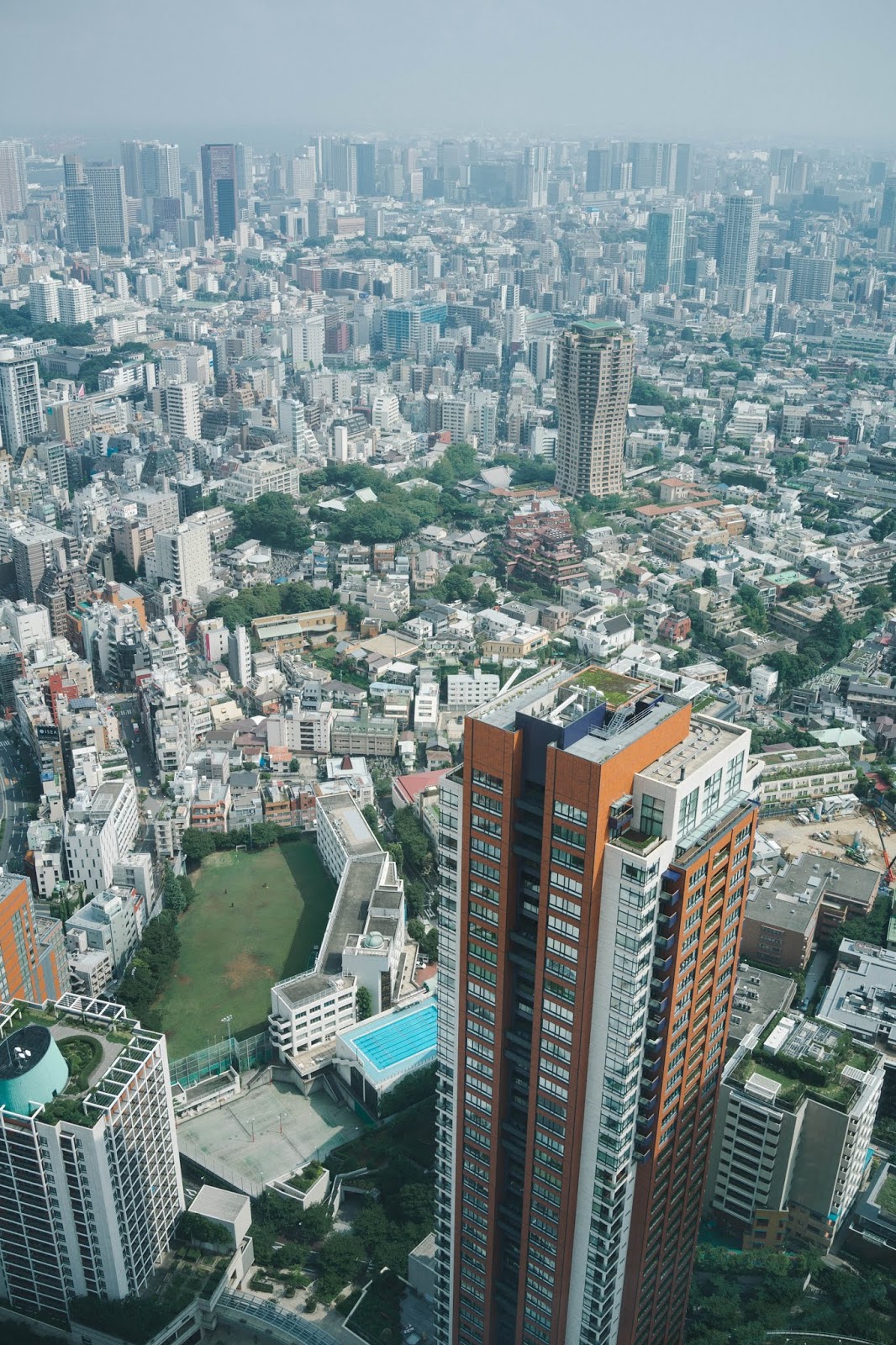


The wards of Tokyo differ from other cities in having a unique administrative relationship with the prefectural government. This framework adjusts the need to maintain unified administration and control across the whole of the ward and the need the nearby ward governments, which are closer to the inhabitants, handle ordinary undertakings. Certain civil capacities, for example, waterworks, sewerage, and putting out fires, are dealt with by the Tokyo Metropolitan Government, while the wards have the self-rule to autonomously deal with issues near the lives of the inhabitants, for example, welfare, training, and lodging. To pay for the additional regulatory costs, the prefecture gathers city charges, which would more often than not be required by the city.

The "three central wards" of Tokyo – Chiyoda, Chūō and Minato – are the business center of the city, with a daytime populace in excess of multiple times higher than their evening time populace. 

Chiyoda 


Chiyoda is situated at the very heart of central Tokyo. Regularly called the "political center" of the nation, Chiyoda, actually means "field of a thousand generations", acquired the name from the Chiyoda Castle (the other name for Edo Castle, the present Imperial Palace). With the seat of the Emperor in the Imperial Palace at the ward's inside, numerous administration organizations, for example, the National Diet, the Prime Minister's Official Residence, the Supreme Court, services, and offices are additionally situated in Chiyoda, as are Tokyo tourist spots, for example, Tokyo Station, Yasukuni Shrine and the Budokan. Toward the upper east of Chiyoda is found the Akihabara commercial district, the famous electric town of Tokyo. Here you will discover more than 250 little electronic shops selling anything from cameras to PCs. 

Chūō


Chūō, as a combination of Kyobashi and Nihonbashi, is the core of Shitamachi, the original downtown center of Edo-Tokyo. Literally meaning "Central Ward",  it is truly the fundamental business center of Tokyo, in spite of the fact that Shinjuku has met people's high expectations it since the finish of World War II. The most well known locale in Chūō is Ginza, based on the site of a previous silver mint from which it takes its name. On the off chance that you are hoping to go out to shop for luxurious products, Ginza is where you’ll want to go as this district is known for being one of the most expensive places in the world. The gold mint, or Kinza (金座), once in the past involved the site of the present-day Bank of Japan central command building, additionally in Chūō.

Minato


Minato was shaped in 1947 as a merger of Akasaka, Azabu and Shiba wards following Tokyo City's change into Tokyo Metropolis. The modern Minato ward exhibits the contrasting Shitamachi and Yamanote geographical and cultural division. The Shinbashi neighborhood in the ward's northeastern corner is attached to the core of Shitamachi, the original commercial center of Edo-Tokyo. Then again, the Azabu and Akasaka zones are commonly representative Yamanote areas. The well known Roppongi nightlife area is situated in Minato. The notable Tokyo Tower is situated in a region by Roppongi, and is a simple 10-15 minute walk. An island amidst Tokyo Bay, Odaiba is Tokyo's most up to date locale. Associated with the terrain by Rainbow Bridge, you'll discover a lot of engaging alternatives all through this cutting edge desert spring of modern structures. 

If you enjoy our article and want to compare car rental options, see Cars Scanner.

1/22/19

Tokyo - The Greatest City in The World

Tokyo - The Greatest City in The World


Tokyo, authoritatively Tokyo Metropolis, one of the 47 prefectures of Japan, has been the Japanese capital since 1869. Starting at 2014, the Greater Tokyo Area positioned as the most crowded metropolitan region on the planet. The urban region houses the seat of the Emperor of Japan, of the Japanese government and of the National Diet. Tokyo shapes some portion of the Kanto district on the southeastern side of Japan's principle island, Honshu, and incorporates the Izu Islands and Ogasawara Islands. Preceding 1868, Tokyo was known as Edo. A little stronghold town in the sixteenth century, Edo turned into Japan's political focus in 1603 when Tokugawa Ieyasu set up his primitive government there. A couple of decades later, Edo had developed into one of the world's most crowded urban communities. With the Meiji Restoration of 1868, the head and capital moved from Kyoto to Edo, which was renamed Tokyo ("Eastern Capital"). Extensive parts of Tokyo were decimated in the Great Kanto Earthquake of 1923 and noticeable all around strikes of 1945. Tokyo Metropolis shaped in 1943 from the merger of the previous Tokyo Prefecture and the city of Tokyo. The city is based on low, alluvial fields and adjoining upland slopes. The atmosphere is mellow in winter and sweltering and sticky in the late spring. Late-spring and early pre-winter are blustery seasons; a few tropical storms more often than not happen amid September and October. 


Tokyo is the Japan's major social focus center. Tokyo is regularly alluded to as a city yet is authoritatively referred to and represented as a "metropolitan prefecture", which contrasts from and consolidates components of a city and a prefecture, a trademark special to Tokyo. Presentations delineating the culture and history of Japan and Asia are highlighted at the Tokyo National Museum in Ueno Park. Ueno Park is likewise the site of a science exhibition hall, a zoological garden, and two noteworthy workmanship galleries. Workmanship and science historical centers are found near the Imperial Palace, and exhibition halls of different kinds are found somewhere else in the city. With 13 tram lines and in excess of 100 surface courses kept running by Japan Railways and other privately owned businesses, Tokyo's railroad framework appears as though it was intended to win world records. It's uncommon to discover an area in the metropolitan zone that can't be come to with a train ride and a short walk. Showy works, including everything from conventional Kabuki to current dramatization, are performed consistently, as are symphonic works, musical dramas, and other Western types of move and music. The University of Tokyo heads an extensive rundown of significant colleges and schools in the metropolitan region. Different features: eat-in counters kept running by a portion of Tokyo's snazziest eateries and free examples of nourishment and alcohol on ends of the week. The scramble road crossing outside of Shibuya Station is effectively the world's busiest, with a thousand people running into the center of the road, weaving together in a colossal natural mass. Tokyo sports 160,000 known restaurants, in excess of multiple times the number in Paris. Tokyo is the central transportation center for Japan, just as an essential worldwide traffic focus. 


It is served by a large system of electric railroads, metros, transport lines, and parkways. Tokyo station is the focal railroad terminal for all of Japan, including the fast Shinkansen trains from western Japan. Ueno Station is the end for rail lines racing to northern Japan, and Shinjuku station is the end for trains from focal Honshu and Tokyo's western rural areas. A few exclusive electric rail lines give interurban travel benefit. Tokyo's universal air terminal is at Narita, in Chiba prefecture, while the city's Haneda air terminal on the sound gives residential administration. There are a couple of three-star champions in the Tokyo Guide - Kanda in Minato-ku, serving sensitive conventional Japanese cooking; Joël Robuchon in Ebisu, the Tokyo fortress of the celebrated VIP gourmet expert; and Quintessence in Shirokanedai, whose youthful French-prepared culinary specialist accomplished acknowledgment in the Japanese culinary chain of importance, on account of his consideration in the Guide. Each March, the "Strolling over-Fire" Festival happens at Mount Takao. At the point when solid Tokyo gets the chance to be excessively, you can take off to the magnificent Mount Takao in West Tokyo. Tokyo was positioned first out of each of the sixty urban communities in the 2017 Safe Cities Index. The QS Best Student Cities positioned Tokyo as the third best city on the planet to be a college understudy in 2016 and second in 2018. Tokyo facilitated the 1964 Summer Olympics, the 1979 G-7 summit, the 1986 G-7 summit, and the 1993 G-7 summit, and will have the 2019 Rugby World Cup, the 2020 Summer Olympics and the 2020 Summer Paralympics.